
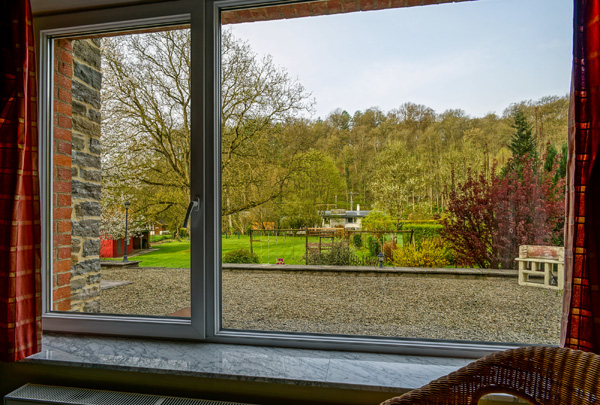
As we speak to homeowners, many are unsure about what at least a few of the terms mean. Many also ask us how and why one window is more energy efficient than another. That often leads us to talking about Low-E glass which inevitably includes introducing visible transmittance or VT. As much as we’ve shared in blogs information about Low-E glass in the past, we’ve never talked about how it may impact the or visible transmittance, of the window itself.
What is Low-E Glass?
Low-Emissivity glass, most often simply referred to as Low-E glass, is window glass with thin metallic oxide coating on it. Nearly all replacement windows have Low-E glass because without this coating, the windows won’t meet ENERGYSTAR® requirements for energy efficiency. In aids in energy efficiency by reducing the strength of UV rays as the come into your home. As an added bonus it also helps prevent fading of windows, furnishings, and flooring.
Understanding Visible Transmittance (VT)
As you look at the National Fenestration Rating Council’s evaluation of the window, you’ll notice a decimal number between 0 and 1 under the label VT. The manufacturer may also disclose this in its marketing material. The decimal tells you the percentage of visible light that passes through the window. For example, a window with at .85 VT allows 85% of the visible light to pass through making for a bright, naturally lit room. However, a lower visible transmittance number will mean less natural light passes through. Depending on the room and the windows themselves, you may want something with a lower VT to reduce glare or reduce solar heating.
How & Why Low-E Glass and Visible Transmittance Work Together
Most homeowners want an energy efficient window to help with the hot summers and cold winters. However, especially in Indianapolis with its dreary winters, most also want natural light in their home. In order to achieve this, you need to look at a window’s light to solar gain ratio (LSG). The ratio provides insight to how much solar heat is block compared to light allowed in.
Although not every window company provides this information, it’s easy to figure out. Simply divide the visible transmittance (VT) by the solar heat gain coefficient (SHGC) to find the light to solar gain ratio. The higher the LSG the more light and less heat gain in your home. Generally anything between 1.25 and 2 is ideal for the greater Indianapolis area.
We Can Help You Find the Right Replacement Windows for Your Home
Whether you’re looking for replacement windows that allow as much natural light as possible or want a balance of natural light and energy efficiency, the Blair Windows & Doors team has the experience to help. Because we sell several different manufacturer’s windows so we have options for every need and budget. Call Blair Windows and Doors to schedule your free in-home estimate at (317) 356-4666 today.
